With the advent of the warmer months, reliable vehicle air conditioning becomes essential to keep the driver cool & maintain comfort behind the wheel.
Proper maintenance of the air-con system helps to avoid sudden breakdowns during peak heat. However, as with any vehicle component, parts do eventually fail & they will need replacing.
When replacing worn out or failed components it is vital that the correct procedures are followed, ensuring that the system operates efficiently & effectively.
When replacing the compressor, it is essential to follow the manufacturers guidelines as failure to do so will invalidate any warranty!
So, with this in mind, let's discover more information about some of the components of an air conditioning system....
Receiver Drier
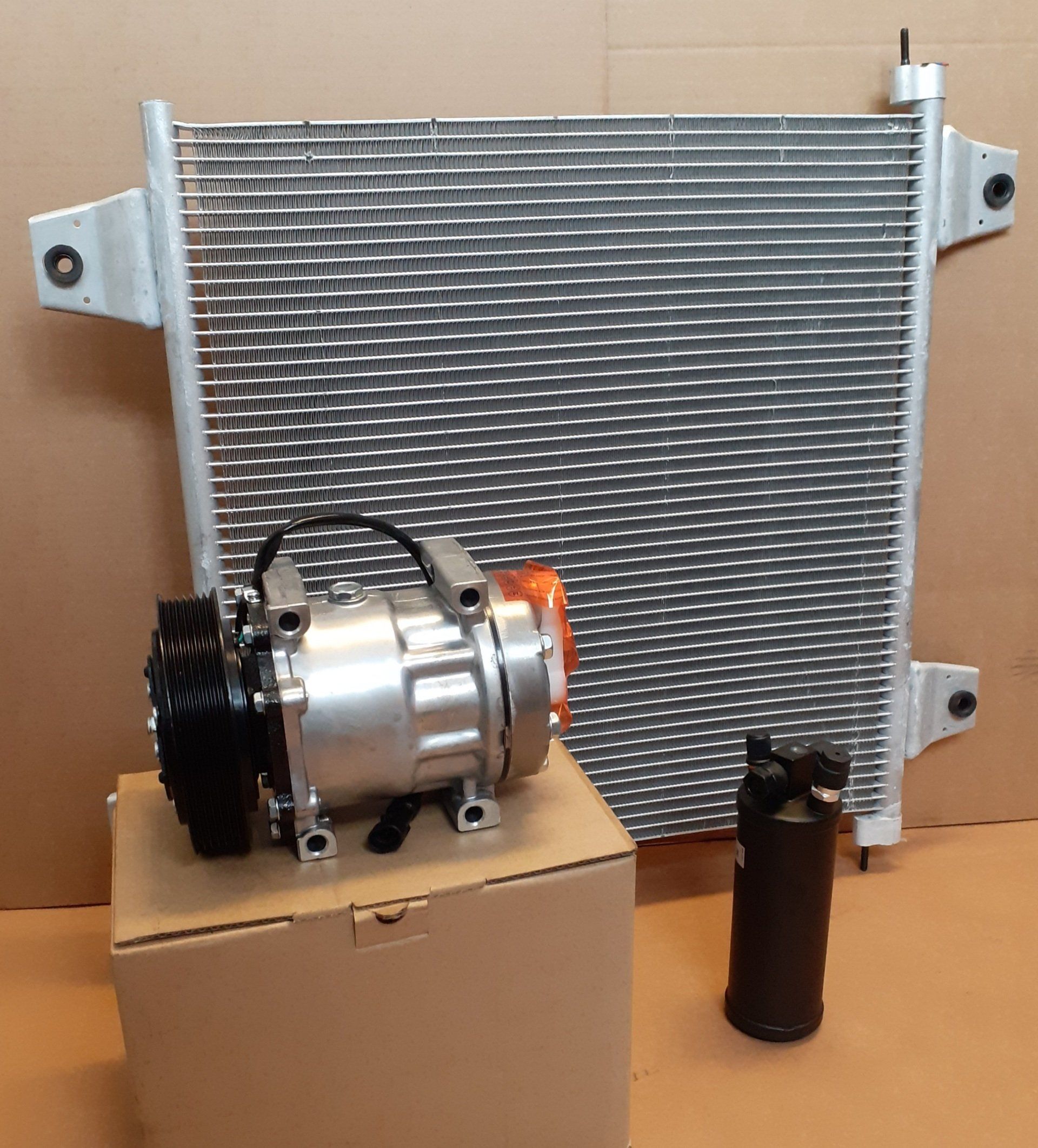
Sometimes referred to as the filter drier, these are used in expansion valve systems. they usually have 2 ports & a small number of driers also feature a sight glass to check refrigerant flow, though the majority don't. These driers are located between the expansion valve & condenser. These driers are filled with dessicant & they temporarily store liquid refrigerant before it reaches the expansion valve. The drier helps to prevent internal corrosion & damage to the air-con system by removing debris & moisture in the loop.
Accumulator
These are used in orifice tube systems and are found on the low pressure side of the system, near the evaporator. Accumulators usually have 3 ports, one for the refrigerant form the evaporator, one going to the compressor & occasionally a pressure switch port. Like a receiver drier, an accumulator contains dessicant to absorb contaminants & moisture, with its main purpose to prevent liquid refrigerant entering the compressor, resulting in damage.
Dessicant Capsules
There are some vehicles that do not have a separate receiver drier or accumulator as they have dessicant capsules that are located in the end of the condenser. These are easily identifiable by a large round tube on one side of the condenser and the capsule can be removed by unscrewing the top of the tube. Simply remove the old dessicant capsule & replace with a new one.
Do I Really Need To Change These Parts?
Yes! Especially when any major component is replaced, especially the compressor.
Compressor manufacturers will instantly void any warranty if the drier / accumulator has not been changed!
Let's look at it another way. When the engine is serviced, the oil filter is always replaced. When any work is carried out on the air-con system why would you not change the filter on the A/C system?
Compressor
The compressor is essentially the heart of the system. Neglecting to properly service & maintain the A/C system will result in a compressor failure.
Compressors are one of the most expensive items to replace on the A/C system so it is vital that the manufacturers fitting guidelines are followed. If a compressor is replaced without resolving the underlying issues within the system, it is highly likely that the new compressor will suffer the same fate as the one that has been replaced.
Whilst there are a number of reasons a compressor fails, here are a few to be aware of:
Contamination - The most common reason why a new compressor fails. Fitting a new compressor to a dirty refrigerant system will leave it wide open to sucking up the contaminants within the dirty system, including rust, sludge & foreign particles that are still in the system. Failure to follow manufacturers compressor fitting guidelines will instantly void any warranty.
Electrical Problems - Poor connections or low voltage can lead to a compressor clutch slipping which may lead to the compressor burning out, even at low to normal head pressures. A faulty pressure switch could cause the compressor to rapidly cycle, resulting in premature clutch failure.
Lubrication Issues - An incorrect amount or type of oil used will lead to a compressor failure. One of the most common causes of compressor failure is insufficient oil leading to overheating, ultimately resulting in seizure.
Overcharging - Overloading the evaporator with more refrigerant than it can handle could result in flooding, whereby liquid refrigerant enters the crankcase of the compressor while it is running. Slugging could also occur (compressor cylinder becomes compromised by refrigerant or refrigerant & oil during an on-cycle). Either of these will lead to a premature compressor failure.
Undercharging - Caused by a faulty or restricted thermostat expansion valve / metering device. This can leave the evaporator starved of refrigerant and this forces the compressor to work harder, putting excess strain on the system.